I traveled to South Africa last summer for ten days and returned home just after my youngest son’s second birthday. When our team landed in Atlanta, we still had one more leg of the trip to go – a short flight to Louisville. But there in the terminal holding a Sports Illustrated with a montage cover of the Lakers and the Celtics, I got the notion that maybe I shouldn’t be on that last flight that would take me all the way back to Kentucky. You see, I grew up only an hour and a half from the Atlanta airport and my parents still live in my hometown. My wife and kids were visiting in Alabama and were going to be coming to stay with my folks on their way back through to Kentucky that very night. It seemed to me a good idea that I ditch the plane in favor of a quick ride home from my Mom or Dad and surprise Marie and the boys with an early reunion. What a plan! I made the call.
Three and a half hours and a Waffle House meal later, I was sitting in my parent’s living room listening to them tell me how scruffy I looked. I was indeed scruffy. I had shaved my head for the trip and it had about twelve days worth of growth on it, as did my gotee – which had undergone some sort of metamorphosis and now went by the name Larry. My cheeks were as full of hair as they ever could be and I was extremely puffy from the lack of sleep I endured on the trip and the grueling 18 + hour plane ride back to the States. Scruffy.
My family did indeed come rumbling in later that evening with Marie explaining why they were so late and asking if anyone had heard from me. After all, I was supposed to be back in Frankfort by now and she hadn’t been able to get me on my cell phone. From my hiding place in the foyer I surveyed the gifts lying on the dining room table which I had purchased for them in Kruger National Park and waited for the moment to spring out and land the knock-out punch surprise. No one expected me to be there.
My mom and sister ushered Marie and the boys into the dining room and began to show them all the gifts that had come from Africa for them. They played it perfect – like it was all very normal that the gifts should be there. Marie was the first to balk at this, questioning with some urgency where these things had come from. My mother said, “They came today,” with a cool that would have made Johnny Depp jealous. Not satisfied, Marie kept pressing about the gifts. So I casually stepped around the corner and said, “I brought them.”
Mayhem.
Marie was elated and probably screamed that little woman scream that sounds more like an EEK! than a scream. Connor ran around the table and bear-hugged me and immediately wanted to be held. Charles…well Charles didn’t do anything. He was standing on the dining room table staring in wild amazement at this scruffy man who had just stepped into his life. After I kissed Marie and broke free from Connor I made my move for Charles. He would have none of that. He immediately sought refuge from the stranger in my mother’s arms and began to cry that nervous don’t-take-me-away cry. I decided I did look a little different from the last time he saw me and being as young as he was, it wasn’t too unbelievable that he had some reservations as to who I really might be. I decided I would leave him in his doubt except to say, “Charles. It’s daddy.” Nope. Unbelief.
We caught up and everyone listened as I regaled them with wild stories of lions and cheetahs, elephants and zebras, leopards and water buffalo, and Soto people who sang and danced their way to the offering plate. Everyone was glad to be together. Charles had even started to play a little, that is until I would try to reach from him. Then he would immediately retreat, so unsure and scared.
As the evening wore on and everyone around him was just so accepting of this strange man, Charles’ nerves wore a little thin and he started letting his displeasure with the whole situation be known by acting out a little. At first it was slightly ignoring instructions. Pretty soon it was full-blown in-your-face disobedience. When he told Marie NO! I decided it had gone far enough and I said in my best Daddy voice, “Charles, no. We do not correct Mommy. Come here.”
I scooped him up in my arms and carried him to the sitting room near the front door and away from everyone else. Charles was in full panic mode at this point but I was undeterred. I took him away and I sat him firmly on my lap and explained to him his sin. Then I disciplined him.
When I sat him back up to face me, he had tears in his eyes but there was something else there too. Recognition. I explained to him again his sin and he gently placed his hand on my arm, looked me in the eyes and said softly, “DaDa.”
He didn’t know his Father until his Father brought him into line and showed him his boundaries and reminded him of authority. His Father was at first unrecognizable. Even with all the presents, the gifts, the stuff, he couldn’t see it. Then discipline brought his Father back to his little mind. He knew then that the hand that had scolded him was the hand that cared for him. From that moment on, he was safe and assured in his Father’s presence and confident of his Father’s love.
 Marie and I are doing a joint study through the tag-team dynamo of Exemplary Husband / Excellent Wife at Buck Run. Because of this, I perused my little section of marriage books again. I found that this little book was missing from the shelves. It doesn’t surprise me. I’ve bought Reforming Marriage about eight times in the life of my ministry. It just always seems to get given away. Mostly because I love strong marriages, but partly because $10 seems like such a small investment in the lives of my brothers and sisters in Christ.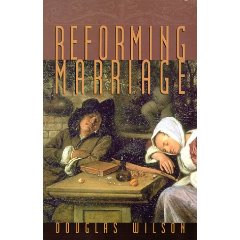
 I am pleased to recommend a book to you.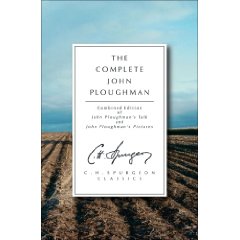
 When I was formulating a worldview of sex and sexuality – thinking about women and how to relate to them – I had a lot of help from Playboy. Starting very young, I was exposed to the explicit images of pornography from friends of mine whose fathers dabbled in the dark side of sex. This is an odd thing to think, but you have to remember that this was before the advent of the internet when explicit images of women were sought and bought quite purposefully and intentionally. That is to say it shouldn’t have been that easy to come by. But it was.
 One thought came blasting into my mind as I surveyed the massive crowd. “The stereotype is deserved.”
 Music can move us emotionally even if the words of the song are totally inappropriate. That may be one of the worst things the American church has adopted in the way of evaluating good music. Many times we don’t care what the song is saying as long as it makes us feel good. Sadly, we apply this evaluation to some of the best Christian songs and hymns. I’ve heard men and women in the church completely clobber majestic hymns or praise songs just because it doesn’t fit their sensibilities or preference. It can be difficult for us to look into the message of a song if the vehicle carrying that message isn’t up to our tastes.
 The “mutual oversight”, as Greg Wills puts it in his excellent book, Democratic Religion, was so stringent that churches had to watch themselves closely to keep from getting other churches in the association all worked up for a council, which would convene to scrutinize the erring congregation.
 two very energetic young men and a husband to a very hard-working woman. The demands of life have taken their toll on me the past two months and I’m tired. But there is encouragement.


 Reformation Station